No Products in the Cart
We have been busy creating new products - Take a look here New Products



Workplace safety data can tell us much more than how many injuries and illnesses occurred. When properly collected, evaluated, and applied, it can help organizations identify hazards, understand why incidents happen, anticipate potential consequences, and make informed decisions that improve safety and reduce risk.
For safety professionals, plant engineers, and warehouse operators, the challenge is understanding how different safety-related processes use information—and how they work together to support continuous improvement. Five approaches deserve particular attention: OSHA Recordkeeping, Workers’ Compensation, Incident Investigation, Risk Assessment, and Management of Change (MOC). Although they may use some of the same information, each serves a different purpose.
1. OSHA Recordkeeping: Documenting What Happened
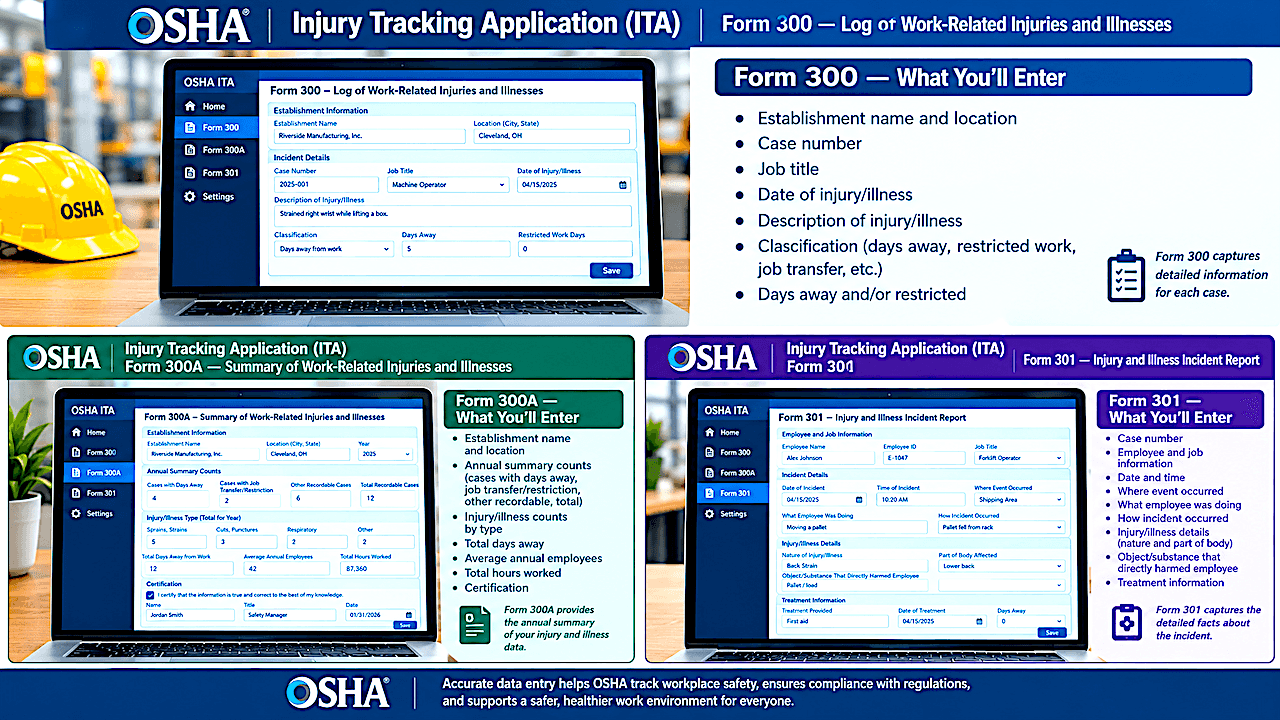
OSHA Recordkeeping provides a standardized method for documenting qualifying work-related injuries and illnesses. Under 29 CFR Part 1904, covered employers generally use three forms: OSHA Form 300, the Log of Work-Related Injuries and Illnesses; Form 300A, the Summary of Work-Related Injuries and Illnesses; and Form 301, the Injury and Illness Incident Report. These records help organizations track cases, calculate injury and illness rates, and identify trends. Depending on applicable requirements, certain establishments must also submit injury and illness data electronically through OSHA’s Injury Tracking Application (ITA).
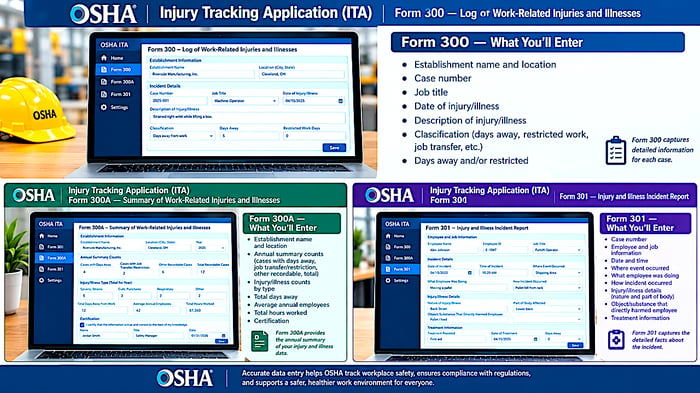
However, recordkeeping has a specific regulatory purpose. A recorded case does not automatically explain why an event occurred, which safeguards failed, or what operational changes might prevent a recurrence. Nor does a low injury rate necessarily establish that a workplace is free of significant hazards. For example, several warehouse employees may experience strains and sprains, but additional analysis is needed to determine whether the underlying issues involve lifting practices, workstation design, material-handling equipment, or repetitive tasks. The takeaway: Use OSHA records to identify patterns and meet applicable requirements, but do not mistake injury counts for a complete assessment of workplace safety.
Reference: OSHA Recordkeeping Requirements, 29 CFR Part 1904.
2. Workers’ Compensation: Administering Benefits and Managing Claims
Workers’ Compensation generally provides medical and wage-replacement benefits for compensable work-related injuries and illnesses, subject to applicable jurisdictional requirements. Claim information may include medical treatment, work restrictions, lost work time, disability, and related costs. Employers, insurers, and claims administrators use this information to manage claims and determine applicable benefits. The information may also reveal useful safety trends. Recurring claims involving back injuries, hand injuries, or lost workdays, for example, may point toward opportunities to improve ergonomics, equipment design, or work practices.
Nevertheless, Workers’ Compensation and OSHA recordkeeping are not interchangeable. They have different definitions, eligibility rules, reporting requirements, and purposes. A Workers’ Compensation claim does not automatically establish that a case is OSHA-recordable, and an OSHA-recordable case does not necessarily result in a compensable claim. The takeaway: Use Workers’ Compensation information to manage claims and recognize potential injury patterns, while evaluating workplace hazards through complementary safety processes.
3. Incident Investigation: Understanding What Happened and Why
Incident Investigation moves beyond documenting an event to examine its causes and contributing factors. Investigators ask what happened, where and when it occurred, what equipment or processes were involved, why the event occurred, which safeguards failed or were missing, and what could prevent a recurrence. A thorough investigation looks beyond the immediate injury to consider equipment condition, workplace layout, procedures, training, maintenance, supervision, workload, and management systems.
Consider a forklift that strikes a storage rack. Recording the event as property damage is only the beginning. An investigation might reveal restricted visibility, inadequate aisle clearance, poorly positioned inventory, damaged floor markings, or weaknesses in the warehouse traffic-management plan. Several factors may have contributed. Investigations should also extend beyond OSHA-recordable injuries to include near misses, equipment failures, property damage, and hazardous conditions. These events can reveal weaknesses before someone is injured. The takeaway: Investigate to understand causes, not merely assign blame. Corrective actions should address contributing factors rather than just the immediate symptoms.
Reference: OSHA Incident Investigation.
4. Risk Assessment: Anticipating What Could Happen
Unlike Incident Investigation, Risk Assessment is proactive. It does not require an injury or equipment failure to have occurred. Risk assessment identifies potential hazards, evaluates the likelihood and severity of possible consequences, and helps determine which controls are needed. Depending on the situation, organizations may also consider the number of people exposed, exposure frequency, and the effectiveness of existing safeguards.
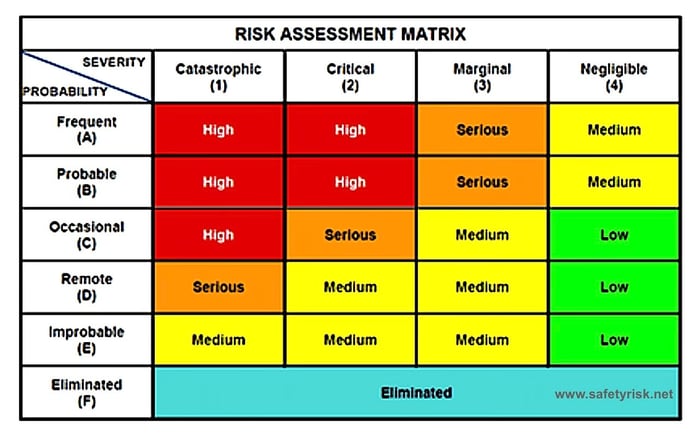
A plant engineer planning a new production line, for example, should evaluate potential hazards before equipment is installed or operations begin. These may include moving machinery, electrical hazards, chemical exposure, ergonomic demands, maintenance access, and interactions between people and powered industrial trucks. In a warehouse, an assessment might examine pedestrian crossings, forklift routes, rack stability, emergency access, fire protection, and hazardous-material storage. Previous incidents, near-miss reports, maintenance records, and inspection findings can help identify where further assessment is needed. Controls should address the hazards and applicable requirements, with preference given to effective engineering and higher-level controls where feasible rather than relying exclusively on training or personal protective equipment. The takeaway: Do not wait for an injury to reveal a hazard. Evaluate risks before introducing equipment, changing workflows, or exposing employees to unfamiliar conditions.
Reference: OSHA Hazard Identification and Assessment.
5. Management of Change: Implementing Improvements Safely
Identifying a hazard and selecting a corrective action are important steps, but implementing a change without evaluating its consequences can introduce additional risks. Management of Change (MOC) provides a structured approach to evaluating, authorizing, communicating, and implementing changes that could affect safety or operations. Depending on the change, the process may address its technical basis, potential safety impacts, operating procedures, training, approvals, inspections, and verification before startup.
Consider a plant that relocates a machine to improve workflow. The change may reduce material travel distances, but it could also obstruct an emergency exit, create a forklift-pedestrian conflict, restrict electrical access, or interfere with maintenance. An effective review identifies these concerns before the new arrangement becomes operational.
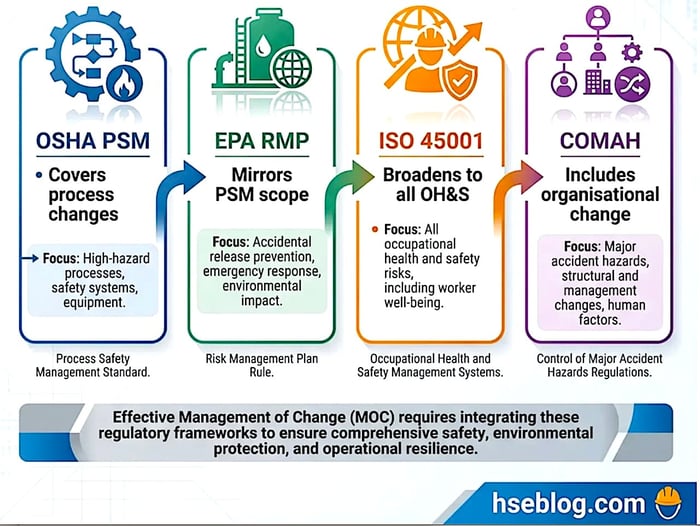
MOC is particularly important in process safety. OSHA’s Process Safety Management Standard, 29 CFR 1910.119(l), requires covered employers to establish written procedures for specified changes to process chemicals, technology, equipment, procedures, and facilities affecting a covered process, excluding replacements in kind. Not every warehouse or plant operation falls under this specific requirement, although a broader change-management process can still be a valuable safety practice. The takeaway: Before implementing a change, evaluate its effects on existing hazards and safeguards, then verify that the change works as intended and that required training, procedures, and documentation are in place.
Reference: OSHA Process Safety Management, 29 CFR 1910.119.
Bringing the Five Approaches Together
These processes provide the greatest value when they complement one another rather than operate as separate administrative responsibilities.
| Process | Primary purpose |
|---|---|
| OSHA Recordkeeping | Documents qualifying injuries and illnesses and supports regulatory compliance. |
| Workers’ Compensation | Administers compensable injury and illness claims. |
| Incident Investigation | Examines what happened, why it happened, and how to prevent recurrence. |
| Risk Assessment | Evaluates what could happen and prioritizes appropriate controls. |
| Management of Change | Evaluates and controls risks associated with applicable changes. |
Imagine that several warehouse employees experience strains while handling heavy products. OSHA records and Workers’ Compensation claims may reveal a pattern. An investigation may identify difficult lifting positions or inadequate material-handling equipment. A risk assessment can determine whether similar hazards exist elsewhere, and MOC can help ensure that a new lifting aid, workstation, or workflow is evaluated and implemented safely. Follow-up inspections, employee feedback, and subsequent incident data can then help determine whether the corrective action was effective.
Organizations should also maintain accurate, consistent information, analyze trends, assign responsibility for corrective actions, and verify completion. Leading indicators—such as completed hazard assessments, timely corrective actions, and preventive maintenance—can complement lagging indicators such as injuries, illnesses, and lost workdays.
Beyond the Numbers: Turning Information Into Prevention
Safety data is most valuable when it leads to informed decisions and effective action. OSHA Recordkeeping documents qualifying cases. Workers’ Compensation administers benefits. Incident Investigation examines what happened and why. Risk Assessment anticipates what could happen. Management of Change helps ensure that applicable changes are evaluated and implemented safely.
The bottom line for safety professionals, plant engineers, and warehouse operators is simple: Use safety and risk data not just to measure past performance, but to make better decisions, prevent future incidents, and reduce workplace risk.
Have a safe day!
— Dave, Mighty Line Minute