No Products in the Cart
We have been busy creating new products - Take a look here New Products

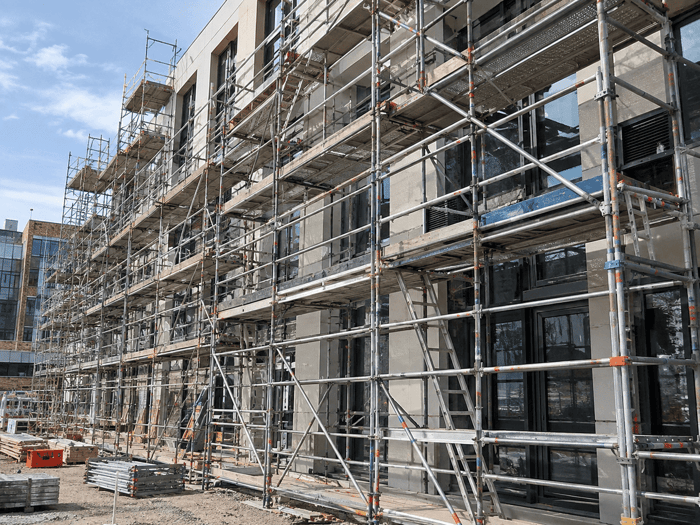
What is scaffolding in construction? It is a temporary structure used to give workers safe access to elevated work areas, materials, and building surfaces during construction, maintenance, or repair. It helps crews work at height more efficiently while supporting movement, tools, and task visibility across the job site.
Scaffolding matters because elevated work always carries risk. When access is unstable, crowded, or poorly planned, job sites become more dangerous and less productive. A properly managed scaffold setup helps workers move with more confidence, keeps work zones more controlled, and supports safer coordination around active construction areas.
Scaffolding is used across many types of projects, from commercial construction and industrial maintenance to painting, façade repair, roofing, and inspections. While the structure itself is central, the surrounding area matters too. Ground-level markings, hazard zones, material staging, and perimeter visibility all help crews stay aware of where scaffold activity begins and where extra caution is needed.
That is why scaffold safety should never be viewed as only an elevated work issue. It is also a site organization issue. When workers, lift equipment, materials, and restricted access zones all meet in the same area, clear visual boundaries make the work environment easier to understand from both above and below.
Scaffolding gives workers a temporary but stable platform to perform tasks above ground level. It is used when ladders are not practical, when more working room is needed, or when a crew must stay positioned at height for extended periods.
When learning what is scaffolding in construction, one of the first things to understand is why scaffolds are often more practical than ladders for extended work at height.
A scaffold system can help support bricklaying, exterior finishing, painting, window installation, maintenance work, and structural repairs. In many cases, it also improves productivity because workers can bring tools and materials closer to the task instead of constantly climbing up and down.
This matters on busy job sites because efficiency and safety often depend on access quality. If workers are forced to reach awkwardly, reposition constantly, or operate from unstable heights, the chance of error rises. A well-planned scaffold helps reduce those issues by creating a more usable work platform.
It also helps teams manage height-related work in a more repeatable way. Instead of relying on improvised positioning, a scaffold system creates structure. That structure supports both the task itself and the safety expectations around it.
A clear answer to what is scaffolding in construction goes beyond metal frames and planks because a complete scaffold system may include platforms, guardrails, braces, access points, baseplates, ties, and support components.
The exact setup depends on the job. Some scaffolds are simple and narrow. Others are multi-level systems that wrap around a large structure. In all cases, the purpose is the same: to create temporary elevated access that supports workers and helps them do the job more safely.
The surrounding ground-level environment should also be considered part of the control plan. When scaffold zones are active, crews below need to understand where materials may be staged, where overhead work is happening, and where they should not pass through casually.
That is where visual marking becomes useful. If scaffold base areas, drop zones, or restricted walkways need stronger visibility, caution safety floor tape diagonal can help highlight hazard-adjacent areas clearly. If the crew needs clean perimeter layouts around scaffold feet, material bays, or access edges, floor marking angles and corners can help create defined zones without possible spelling mistakes. the space.
4" Wide Caution Floor Tape - 100' Roll

$ 297.22
Each order includes 1 roll of 4" Mighty Line Hazard Floor Tape, 100' long. 4" Wide Caution Floor Tape - 100' Roll is a peel-and-stick industrial floor marking tape for aisles, work cells, equipment zones, storage areas, and 5S visual-control… read more
Scaffolding helps make elevated work safer because it provides a larger, more stable platform than a ladder. Knowing what is scaffolding in construction helps explain why a larger, more stable work platform can improve control during elevated tasks. Workers can face the task more naturally, keep tools nearby, and move with less repositioning. That improves control, especially during tasks that take time or require more than one person.
This does not mean scaffolding is automatically safe. The system must be erected correctly, inspected, used properly, and supported by site controls. But when those elements are in place, scaffolding can improve working conditions significantly.
It also supports coordination. A scaffold can create space for multiple workers to perform connected tasks at the same elevation. That is useful on projects where timing and access matter, such as installation work, repairs, or surface preparation on large buildings.
Just as important, scaffolding can help reduce unsafe improvisation. Workers are less likely to overreach or use unstable alternatives when the job has been planned with appropriate elevated access from the start.
Different projects call for different scaffold systems. The best option depends on the height, structure, task type, and site conditions.
Another important part of understanding what is scaffolding in construction is recognizing that different scaffold systems are designed for different heights, tasks, and site conditions.
Here is a simple comparison of common scaffold types:
For anyone researching what is scaffolding in construction, supported scaffolding is one of the most common systems used for general building and exterior work.
| Scaffold Type | Best Used For | Main Advantage |
|---|---|---|
| Supported scaffolding | General building construction and exterior work | Stable platform built from the ground up |
| Suspended scaffolding | High-rise exterior maintenance or façade access | Can be raised or lowered as needed |
| Rolling scaffolding | Indoor work and short-distance repositioning | Easier mobility on smooth surfaces |
| Cantilever scaffolding | Areas with limited ground support below | Allows access where base placement is restricted |
| System scaffolding | Large commercial or industrial projects | Flexible configuration and repeatable setup |
Supported scaffolding is one of the most common systems seen on construction sites because it works well for many general tasks. Suspended scaffolding is often used on tall building exteriors. Rolling systems are more common indoors, where the ground is smooth and stable.
The most important point is that the scaffold type should match the work being done. Choosing the wrong system can create limitations that affect both safety and productivity.
For most standard construction environments, supported scaffolding is the most applicable option. It is widely used because it creates a stable platform, can be configured for different heights, and supports a range of trade activities.
That said, the best option still depends on the work area. Indoor finishing jobs may benefit from rolling scaffolds. Tight exterior conditions may require canopy solutions. High-rise façade work often needs suspended access.
The right choice should be based on three practical questions. How high is the task? How long will the crew need to stay there? What surface or structure can safely support the scaffold system?
This is also where job site planning becomes important. A scaffold does not exist in isolation. Its footprint affects traffic flow, staging, overhead awareness, and restricted areas below. When crews plan both the structure and the surrounding zone, the worksite becomes easier to manage.
Many scaffold risks start at ground level, not on the platform. The question what is scaffolding in construction should also include how the area below the scaffold is controlled and organized. Workers below may walk through material staging paths, pass beneath active overhead work, or enter restricted areas without noticing where scaffold activity begins.
That is why visual control around the scaffold base matters. Clear floor-level cues help separate active work zones from general movement paths. They also help visitors, subcontractors, and new workers understand where caution is needed without relying only on verbal reminders.
Perimeter marking is especially helpful around scaffold access ladders, drop zones, tool staging points, and loading areas. A site may already understand the importance of fall protection above, but lower-level awareness is just as important for preventing avoidable incidents below.
For teams reviewing color visibility and safety communication, this article on ISO standards and floor marking safety colors helps explain how color choices support faster recognition. This related piece on understanding OSHA workplace safety also connects well with scaffold-zone awareness and broader site discipline.
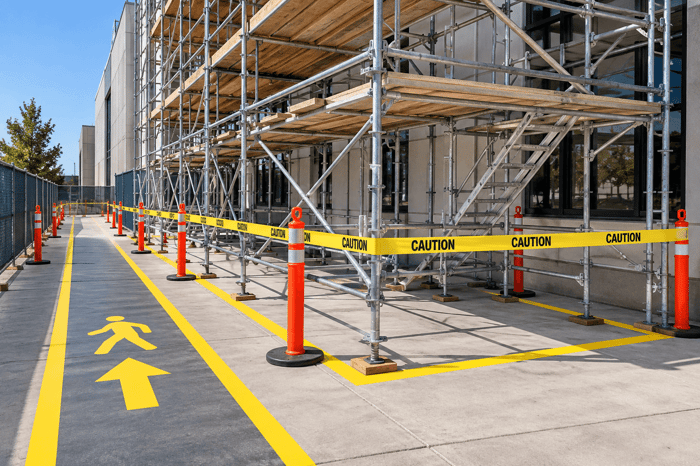 Scaffold base area secured with a clearly marked caution perimeter and designated pedestrian access path for safer site movement.
A safe scaffold setup is stable, correctly assembled, properly accessed, and used within its limits. Understanding what is scaffolding in construction also requires knowing the difference between a properly managed scaffold and an unsafe setup. An unsafe setup often shows warning signs before something goes wrong.
For example, missing guardrails, poor footing, overloaded platforms, unapproved modifications, and weak access control all increase risk. The same is true when the scaffold area below is cluttered, unmarked, or exposed to uncontrolled traffic.
Safe use also depends on inspection and discipline. Even a correctly erected scaffold can become unsafe if materials are piled carelessly, braces are altered, or weather conditions change. Strong safety habits are built on consistent review, not just initial setup.
This is one reason scaffolding should be treated as an active system rather than a static one. Conditions around it change throughout the project. Materials move. Trades rotate through the space. Access patterns shift. When the zone is monitored visually and operationally, those changes are easier to catch.
Scaffold safety becomes stronger when it is integrated into site planning instead of being treated as a separate issue. The structure affects movement, deliveries, material storage, access routes, and hazard communication. That means the crew should plan around it, not merely build it and work from it.
When supervisors consider what is scaffolding in construction, they should also account for traffic flow, material staging, access routes, and restricted areas around the structure.
For example, the ground around the scaffold should not become a casual storage area. Access points should stay clear. Overhead work should be recognized below. Pedestrian routes should not pass through the most active scaffold base unless that path is specifically protected and necessary.
A clean site supports safer scaffold use because workers are less likely to step around obstructions, squeeze through tight access areas, or move under active work without realizing the exposure. Good organization also improves response time when something needs attention because the area is easier to read quickly.
This is where simple marking tools can make a big difference. Visible corners, caution patterns, and defined staging outlines help translate the scaffold plan into a physical layout that crews can follow day to day.
Supervisors and workers do not need to inspect scaffolding in the same way every trade specialist would, but they should still watch for visible conditions that suggest the area may not be safe for normal use. Learning what is scaffolding in construction helps workers recognize visible conditions that may indicate the scaffold or surrounding area needs attention.
They should look for unstable footing, missing components, incomplete guardrails, blocked access points, loose materials, and any sign that the zone below is not being controlled. They should also pay attention to weather changes, heavy use, or modifications that may affect stability or access.
Just as important, they should notice site behavior. Are workers entering the scaffold area casually without purpose? Are materials stacked where people need to move? Is the area below protected clearly enough for foot traffic nearby? These visible conditions matter because scaffold safety includes how the surrounding area is used.
Some scaffold issues come from equipment or structure, but many come from poor planning. A complete explanation of what is scaffolding in construction should also address common mistakes such as poor access control, clutter, unstable footing, and inadequate fall protection. One common mistake is focusing only on the platform while ignoring the zone below. Another is allowing unrestricted movement through areas where overhead work or material handling is active.
A different mistake is poor visual communication. Workers may know a scaffold is present, but that does not mean they understand the boundaries of the work zone. If access paths, caution areas, and material drop exposure are not obvious, the site depends too much on memory and verbal warnings.
Another problem is clutter. When scaffold feet, entry points, or material loading areas are surrounded by loose equipment or unplanned storage, the entire setup becomes harder to use safely. Visual order supports physical safety because it reduces hesitation and conflict around movement.
A good way to improve awareness is to start from the base of the scaffold and work outward. Identify where workers enter. Identify where materials are staged. Identify where people below should not linger. Then create visual cues that match those realities.
That may include caution-marked perimeters, corner-defined loading zones, clear route separation, and stronger visibility around access points. The goal is not to mark every inch of the site. The goal is to make the most important decisions visible.
This is where “what is scaffolding in construction?” becomes more than a definition. It becomes a question about how temporarily elevated access fits into the real conditions of a working job site. The scaffold itself matters, but the surrounding behavior matters just as much.
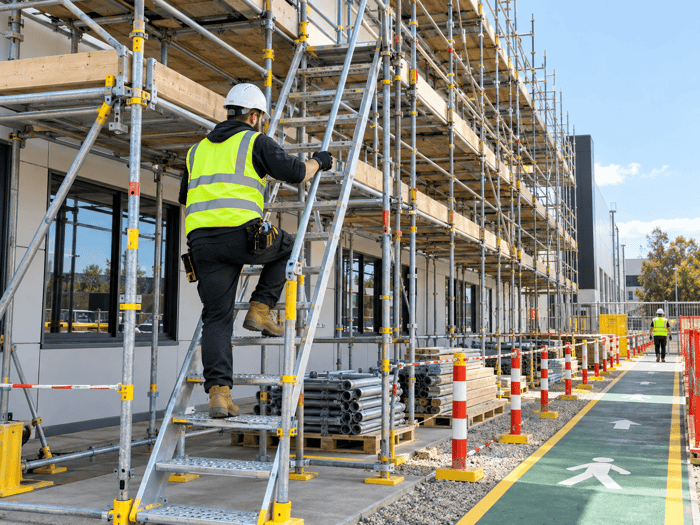
Worker accessing a scaffold ladder with the surrounding ground area clearly organized, marked, and separated for safer site movement.
Safe scaffolding is not only about compliance. It also supports better job flow. When access is stable, platforms are usable, and ground-level areas are controlled, crews can work with fewer interruptions.
Understanding what is scaffolding in construction also shows why proper scaffold planning can support productivity as well as worker safety.
They spend less time repositioning. They lose less time navigating clutter. Supervisors spend less time correcting preventable movement issues. Other trades can move nearby with a better understanding of what the scaffold zone requires.
That balance is important because the most effective job sites do not separate safety from productivity. They use structure, visibility, and site discipline to support both at the same time.
Ultimately, knowing what is scaffolding in construction means understanding both the temporary elevated structure and the surrounding controls that help crews work safely and efficiently.
The strongest job sites support scaffold use with clear access, controlled ground zones, visible caution areas, and better traffic awareness. When those elements work together, crews can operate with more confidence and less confusion from the ground up.
Five common requirements for scaffolding include a stable foundation, proper platform support, safe access, guardrail or fall protection where needed, and regular inspection before use. These basics help create a structure that can support workers and materials more safely. In practice, scaffolding should also be erected according to the intended design and job conditions so the system remains stable and usable throughout the work period.
The 3-to-1 rule for scaffolding usually refers to maintaining safe structural proportions and support awareness, but teams should always follow the specific standards and site requirements that apply to the scaffold system being used. Different scaffold rules are often confused with ladder ratios, so it is important not to rely on shorthand alone. Crews should use the manufacturer's guidance, qualified setup practices, and the job site safety plan for the correct requirements.
Three of the most common scaffolding violations are improper fall protection, unsafe access, and unstable or incomplete platforms. These issues appear when guardrails are missing, workers climb in unsafe ways, or platforms are overloaded or not fully secured. Many violations also involve the surrounding area, such as poor housekeeping or inadequate control below the scaffold, which increases overall site risk.
The golden rules of scaffolding are to build it correctly, inspect it often, use it within limits, and keep the surrounding work zone controlled. Workers should never assume a scaffold is safe just because it looks complete from a distance. Safe scaffold practice depends on correct erection, proper access, good housekeeping, clear communication, and consistent attention to changing site conditions from start to finish.