No Products in the Cart
We have been busy creating new products - Take a look here New Products

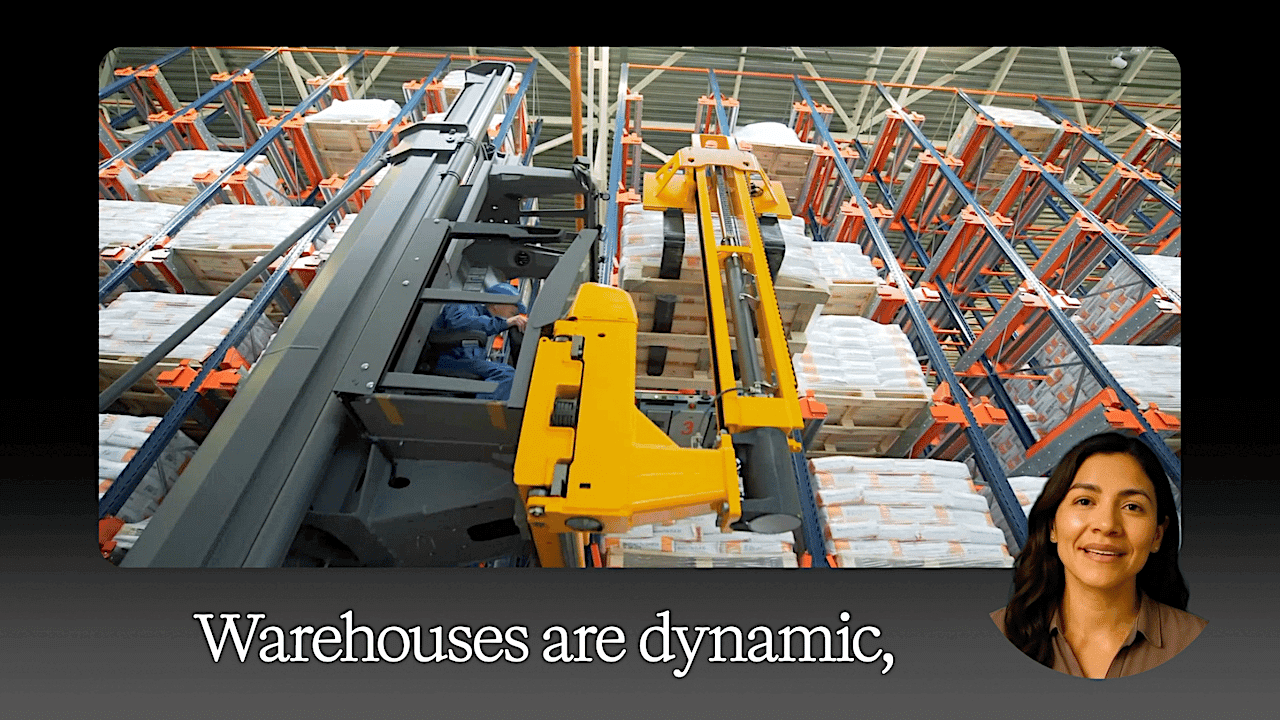

Today we're covering risk control - and the critical importance of employing risk assessment techniques to assure safety and operational excellence in warehouse operations.
Warehouse operations move fast—and risk moves just as quickly. Forklifts travel tight aisles under production pressure. Associates lift, scan, stage, and ship product against demanding service levels. Conveyors run continuously. Areas around dock doors and levelers remain busy all day. In this environment, small gaps in process control can quickly lead to accidents, injuries, equipment damage, downtime, and costly disruptions.
Risk assessment is not paperwork. It is not a once-a-year safety initiative. It is a practical management discipline that strengthens reliability, improves workflow, reduces variability, and protects both people and profit. When applied consistently, risk assessment becomes a driver of operational excellence and sustainability—not just regulatory compliance.
Warehouses are dynamic systems. A small change—new racking, increased SKU velocity, a layout modification, or staffing changes—can alter risk exposure overnight.
Unchecked risks can result in:
Structured risk control processes (e.g. risk assessments) shifts your operation from reactive to proactive. Instead of responding to incidents, you identify hazards early, evaluate their potential impact, and apply controls before harm occurs.
Many organizations align their safety systems with standards such as ISO 45001, Occupational Health and Safety Management Systems, which formalizes hazard identification and risk control processes. Whether certified or not, the core principles apply universally: identify, evaluate, control, and continuously improve.
Of the following five risk assessment techniques, each system provides a structured, practical approach to building safer, more stable, and higher-performing warehouse operations. Check out these risk control techniques:
Hazard Identification and Risk Assessment (HIRA) is your foundation for risk control. It provides a facility-wide, big-picture view of operational risk.
This method typically involves structured walkthroughs across:
Teams identify hazards, determine who might be harmed, assess likelihood and severity, review existing controls, and document findings in a risk register. For middle management, HIRA delivers three key benefits:
HIRA becomes the backbone of your health and safety management system. Without it, risk management becomes fragmented and reactive.
Once hazards are identified, they must be ranked. Not every risk carries equal weight. The Risk Matrix is a simple but powerful tool that scores:
Most matrices use a 1–5 scale for each, multiplying the two values to generate a risk score. For example:
The value of the Risk Matrix lies in objectivity. Instead of reacting to the loudest complaint or most recent incident, you allocate resources to the highest-rated risks first. For middle managers managing budgets and staffing constraints, this helps justify investments in:
It transforms safety from opinion-based decision-making into data-driven prioritization.
While HIRA looks at the facility, Job Hazard Analysis (JHA) drills into specific tasks.
For example: pallet picking with a forklift.
The process involves:
That hierarchy typically prioritizes:
JHA is especially powerful because it engages frontline employees. Operators often know where real risk exists. Involving them builds ownership and improves compliance with safe work procedures.
For middle management, JHA provides:
It connects risk management directly to daily execution.
Failure Mode and Effects Analysis (FMEA) originated in high-reliability industries and was later refined in automotive manufacturing. It is highly effective in warehousing—especially where equipment uptime is critical.
FMEA asks:
Consider these warehouse examples:
Traditional FMEA multiplies Severity, Occurrence and Detection. This yields a Risk Priority Number (RPN). However, relying solely on RPN can be misleading. Different combinations of these three factors can conceivably produce identical scores—even if one scenario involves catastrophic harm and another involves minor inconvenience.
Modern FMEA improves prioritization by emphasizing Action Priority, which weighs severity more heavily. This ensures that low-frequency but “catastrophic” risks receive immediate attention.
For warehouse managers responsible for uptime, FMEA strengthens:
It also bridges safety and operational excellence.
Even in well-managed facilities, incidents and near-misses occur. The danger lies in treating symptoms instead of causes. The 5 Whys method digs deeper by repeatedly asking “Why?”—usually five times—to uncover root causes.
Example: A pallet strike occurs.
Why? The forklift veered outside the lane.
Why? The lane markings were faded.
Why? They were not part of scheduled inspections.
Why? There is no visual control review in the preventive maintenance program.
Why? Responsibility for facility marking upkeep was never assigned.
Now the solution is no longer retraining the operator—it is correcting a management system gap.
For middle managers, 5 Whys supports:
It reinforces a culture where learning replaces blame.
These five techniques form comprehensive risk management and control opportunities:
When applied, they drive:
Safety, health and productivity are not competing priorities. They are mutually reinforcing. Organized, clearly marked traffic lanes, storage and pedestrian walkways improve both safety and throughput. Well-maintained equipment reduces both injuries and downtime risk. Standardized operating procedures combined with robust training and followthrough increase both consistency and efficiency.
Senior leadership sets policy, and frontline employees execute the work. Middle management connects the two. You translate strategy into daily practice, allocate resources, reinforce standards, and shape the culture of accountability and performance more than any other level of the organization.
When you treat risk assessment as a leadership discipline rather than a compliance task, it becomes a competitive advantage. Safer operations are more stable, stable operations perform more predictably, and predictable performance drives customer confidence and business growth. In today’s warehousing environment, risk assessment is not optional; it is fundamental to operational excellence and long-term sustainability.
The real question is not whether to use these risk control tools—individually or in combination—but how consistently and effectively you select and integrate them, including training others to apply the processes effectively in daily operations.
This requires staying proactive and structured, while ensuring reliable follow-through.
Most importantly, commit to designing, maintaining, and continuously improving your EHS and operational management systems to systematically reduce risk, strengthen reliability, and protect your people, the public, your customers, and your organization’s overall operational performance.
Be sure to follow up with Mighty Line to learn how they can help improve safety, operational excellence, and 5S systems across your operations.”