No Products in the Cart
We have been busy creating new products - Take a look here New Products

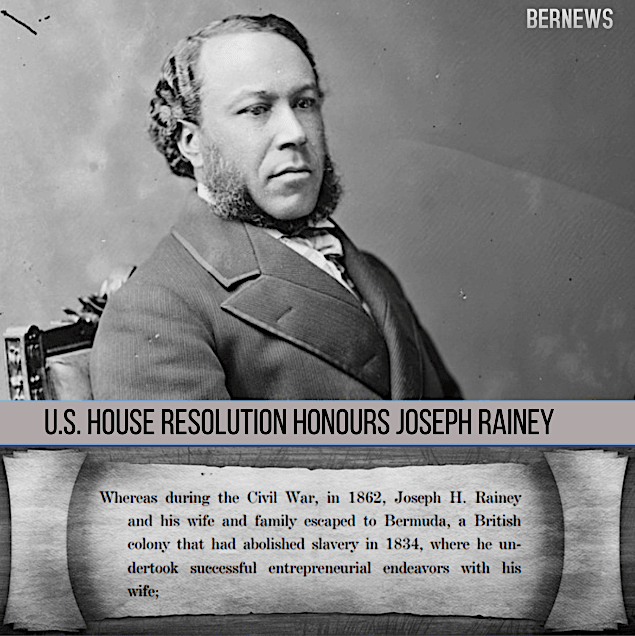

U.S. History often remembers the names that appear in textbooks—the firsts, the elected, the sworn in. But behind many of those names stand lives of quiet endurance, unseen strength, and uncredited leadership. Such is the story of Susan Elizabeth Cooper Rainey, a woman whose resolve and sacrifice made possible the rise of her husband, Joseph Hayne Rainey, the first Black man elected to the United States House of Representatives.
To understand Susan Rainey is to understand that progress is rarely achieved alone.
In 1870, the United States was emerging—unevenly and violently—from the Civil War. That year marked several historic milestones. Hiram Rhodes Revels was sworn in as the first Black U.S. Senator on February 25. Later that same year, on December 12, Joseph Hayne Rainey took his seat in the House of Representatives, representing South Carolina’s First Congressional District.
But Joseph Rainey’s presence in Congress did not materialize in isolation. It was forged through years of danger, displacement, and survival—much of it borne alongside his wife, Susan.
Susan Elizabeth Cooper
Susan was a free woman of color, born in South Carolina, with family roots in the West Indies—a lineage that exposed her early to the fragility of freedom in a slaveholding society. In 1859, she married Joseph Rainey in Philadelphia, a city that offered relative safety and opportunity for free Black families.
Soon after, the couple returned to South Carolina and began raising a family. It was a hopeful but perilous choice. As sectional tensions escalated into open war, Southern laws grew increasingly hostile toward free Black people. Arrest, forced labor, and re-enslavement were ever-present threats. Simply existing as a free Black family in the Confederacy became an act of defiance.
Susan understood what was at stake—not just politically, but personally.
Choosing Exile Over Enslavement
By 1862, the danger in U.S. history had become undeniable. Susan and Joseph made a decision that would define their future: they fled the Confederacy.
Their escape to Bermuda, a British territory where slavery had already been abolished, was not merely a relocation—it was a leap into uncertainty. Imagine the terror of that journey: leaving everything familiar behind, crossing open water with children in tow, unsure of what awaited them on the other side.
Yet Susan did not allow fear to define her role. In Bermuda, she became an entrepreneur, sewing and tailoring dresses to support the family. Joseph worked as a barber. Together, they rebuilt their independence stitch by stitch, client by client. Survival required adaptability, and Susan met that challenge with skill, discipline, and quiet confidence.
These were not years of political ambition—they were years of preparation.
Returning to a Broken America
U.S. history shows shows that following the Civil War, the Raineys returned to the United States, entering a nation fractured by Reconstruction. The promise of freedom clashed violently with backlash, intimidation, and systemic resistance. As Joseph became politically active, eventually winning election to Congress, scrutiny followed closely behind.
Racist threats were constant. Political opposition was often personal and venomous. For Joseph, serving in Congress meant navigating a battlefield that extended well beyond the chamber floor.
For Susan, it meant holding everything else together.
She raised their three children with structure and dignity, shielding them from the worst of the hostility when possible and preparing them for a world that would not always welcome them. She maintained the household while her husband traveled, debated, and defended civil rights legislation during some of Reconstruction’s most volatile years.
Her leadership did not come from speeches or votes—but from consistency, resilience, and moral grounding.
A Sanctuary in Windsor
During summers, the Rainey family found refuge in Windsor, Connecticut, at the First Church of Windsor—one of the oldest congregations in the country. There, Susan cultivated something just as vital as political progress: community.
Faith, fellowship, and stability offered a counterweight to the hostility Joseph faced in Washington and the South. Susan understood that survival required more than courage—it required rest, reflection, and connection. In Windsor, she wove those elements into a protective fabric around her family.
In doing so, she modeled a form of leadership that rarely makes headlines but sustains movements across generations.
The Power of the Unseen
Susan Rainey’s legacy is not preserved in legislation or monuments. It lives in the fact that Joseph Rainey was able to serve four terms in Congress, advocating for civil rights, education, and Reconstruction policies that shaped the postwar nation.
Her strength exemplifies the often-unrecognized role of Black women in U.S. history—women who carried families through terror and transition, who made impossible choices under impossible conditions, and who ensured that progress did not collapse under its own weight.
Susan Rainey did not seek recognition. She created conditions where history could happen.
A Legacy Set to Music
That spirit—the endurance, the resolve, the quiet courage—is what inspires the music accompanying this story of U.S. history.
Composed by Dave Tabar, the piece draws directly from Susan Rainey’s unyielding character. It is brought to life by the soulful voice of Evelyn Wright, whose delivery captures both tenderness and strength. The arrangement is elevated by the expressive keys of Mark Walker, an acclaimed British gospel keyboardist, adding depth and reverence to the narrative. The recording, produced at Soundworks Studios in Leeds, UK by Will Jackson and released on Blackpool Records® in 2018, serves not merely as accompaniment, but as a tribute.
Together, the music and story invite us to listen—not just to history’s loudest moments, but to its quiet foundations.
Why Susan Rainey Still Matters in U.S. History
Susan Rainey reminds us that behind every visible breakthrough lies invisible labor. Her life speaks to the power of resilience in times of uncertainty, to the courage required to choose freedom when safety is not guaranteed, and to the enduring impact of those who support change without standing in its spotlight.
Her story challenges us to reconsider how we define leadership—and whom we choose to remember.
In every struggle, Susan Rainey found a way not only to endure, but to uplift those around her. May her legacy continue to inspire perseverance, dignity, and humanity in our own time.