No Products in the Cart
We have been busy creating new products - Take a look here New Products

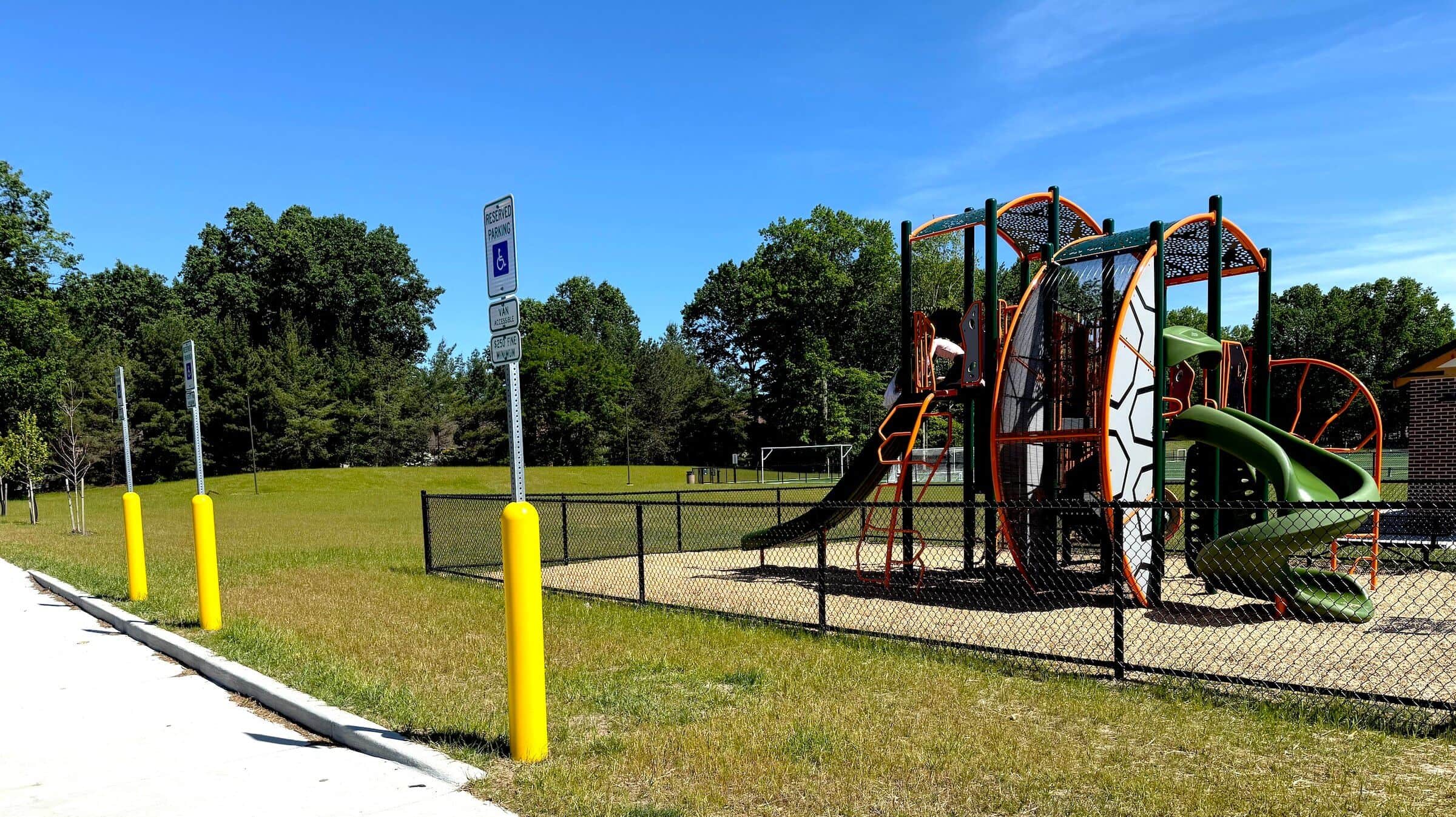

Safety Bollards 101: When families visit a playground, daycare center, church nursery, community park, or recreation area, they expect the environment to be safe. Parents and caregivers naturally focus on playground equipment, fencing, supervision, and maintenance. Yet one potential hazard often receives far less attention than it deserves: accidental vehicle intrusion from nearby parking lots, drive lanes, and roadways.
For locations where children gather, even a low-speed impact can have devastating consequences. Fortunately, modern engineering standards provide proven methods for reducing this risk. One of the most important standards in this area is ASTM F3016-2019, Low-Speed Vehicle Impact Protection Standard. This internationally-recognized standard involves testing of "safety bollards" in order to assess (and qualify) vehicle impact protection systems designed specifically for low-speed environments.
Understanding the Risk
Many child-focused facilities are located adjacent to parking areas. Schools, churches, daycare centers, recreation facilities, libraries, and public parks frequently place playgrounds, picnic areas, or outdoor gathering spaces near parking stalls and vehicle circulation routes. Many outdoor dining areas also exist near vehicle parking or traffic that are (a) not provided with safety bollards, or (b) provided with inadequate safety bollards, barriers, or suitable obstructions.
This proximity creates a potential vulnerability. A driver may mistakenly press the accelerator instead of the brake. A driver may experience a medical emergency—which is far more common than many people realize. A distracted motorist may lose control while maneuvering through a parking lot. Even at speeds of only 10 to 15 miles per hour, a vehicle can penetrate fences, landscaping, or light decorative barriers.
Safety professionals, project engineers, and property owners increasingly recognize that physical vehicle barriers can provide an important layer of protection between vehicles and vulnerable populations, especially children.
What Is ASTM F3016-2019?
ASTM F3016-2019 Low-Speed Vehicle Impact Protection Standard, is a standard developed by ASTM International that establishes crash-testing requirements for low-speed vehicle impact protective devices. These devices are commonly referred to as crash-rated safety bollards.
Unlike decorative posts or architectural barriers, ASTM F3016-compliant systems are designed and tested to withstand vehicle impacts under controlled conditions. The standard helps engineers, architects, safety professionals, and property owners evaluate whether a protective system can perform as intended during a low-speed vehicle collision.
Importantly, the standard evaluates the entire protective system—not merely the visible steel bollard above ground.
More Than Just a Steel Post
One of the most important aspects of safety bollards is that their effectiveness depends heavily on what exists beneath the surface.
ASTM F3016 testing evaluates the complete installation system, including:
A heavy steel post installed without adequate foundation support may provide little meaningful protection during an impact. Conversely, a properly engineered system combines the bollard and foundation into a unified vehicle restraint system capable of absorbing and redirecting impact forces.
This distinction is critical when evaluating products for schools, churches, parks, and childcare facilities.
Understanding Speed Classifications
ASTM F3016 establishes three primary impact-speed classifications:
These speeds reflect common operating conditions found in parking lots, school drop-off zones, church parking areas, recreation centers, and similar low-speed environments.
The selected speed classification should reflect actual site conditions. Higher-speed classifications generally provide greater protection but may also require more substantial foundations and installation costs.
Understanding Penetration Ratings
In addition to speed classifications, ASTM F3016 includes penetration ratings that measure how far a vehicle travels beyond the protective barrier after impact.
The two most common classifications are:
For areas occupied by children or dense pedestrian traffic, P1-rated systems generally provide the highest level of protection because they minimize vehicle movement beyond the barrier line. In practical terms, reducing penetration distance can make a significant difference when protecting playgrounds, outdoor dining spaces, daycare entrances, or pedestrian gathering areas.
Matching Protection to Risk
Not every site requires the same level of protection. Effective vehicle impact protection begins with a professional risk assessment.
Factors that should be evaluated include:
For example, a church preschool immediately adjacent to parking spaces may warrant a different protection strategy than a neighborhood park separated from parking by significant setbacks, curbing, mature trees, or elevation changes.
In some situations, an S10/P1 system may provide appropriate protection. In others, an S20/P2 or S20/P1 system may be more suitable. The correct choice depends on actual site-specific conditions rather than a one-size-fits-all approach.
Qualified engineers, architects, safety consultants, and site designers can help determine the appropriate level of protection.
Beyond Playgrounds: Protecting Outdoor Gathering Areas
While child play areas are a major concern, ASTM F3016-compliant bollards can also help protect many other public spaces.
Examples include:
As outdoor gathering spaces become increasingly popular, many property and business owners are recognizing the value of integrating crash-rated protective systems into their site designs.
Funding Opportunities May Exist
One challenge facing nonprofits, schools, churches, and municipalities is project funding.
Organizations should investigate potential grant opportunities that may support physical security improvements. Certain preparedness, security, and resilience programs may provide funding assistance for eligible vehicle barrier projects.
Some nonprofit organizations may qualify for assistance through security-related grant programs administered at the federal, state, or local level. Because eligibility requirements vary, organizations should consult grant specialists, state, federal or provincial emergency management agencies, or qualified advisors when exploring funding opportunities.
A Proactive Approach to Safety
Ultimately, ASTM F3016-2019 compliant safety bollards represent far more than decorative site furnishings. They are engineered protective systems designed to reduce the risk of low-speed vehicle intrusion into areas occupied by people.
For schools, churches, daycare centers, playgrounds, parks, and outdoor dining venues, these systems can provide an important layer of protection against incidents that, while infrequent, can have life-altering consequences.
Protecting children requires attention to both common and uncommon hazards. By evaluating site-specific risks, following recognized engineering standards, and implementing properly designed vehicle impact protection systems where appropriate, organizations can create safer environments for families and communities.
When it comes to protecting children at play, preparation and prevention remain among the most effective safety tools available, along with the research, planning, and design necessary to create safer environments.