No Products in the Cart
We have been busy creating new products - Take a look here New Products

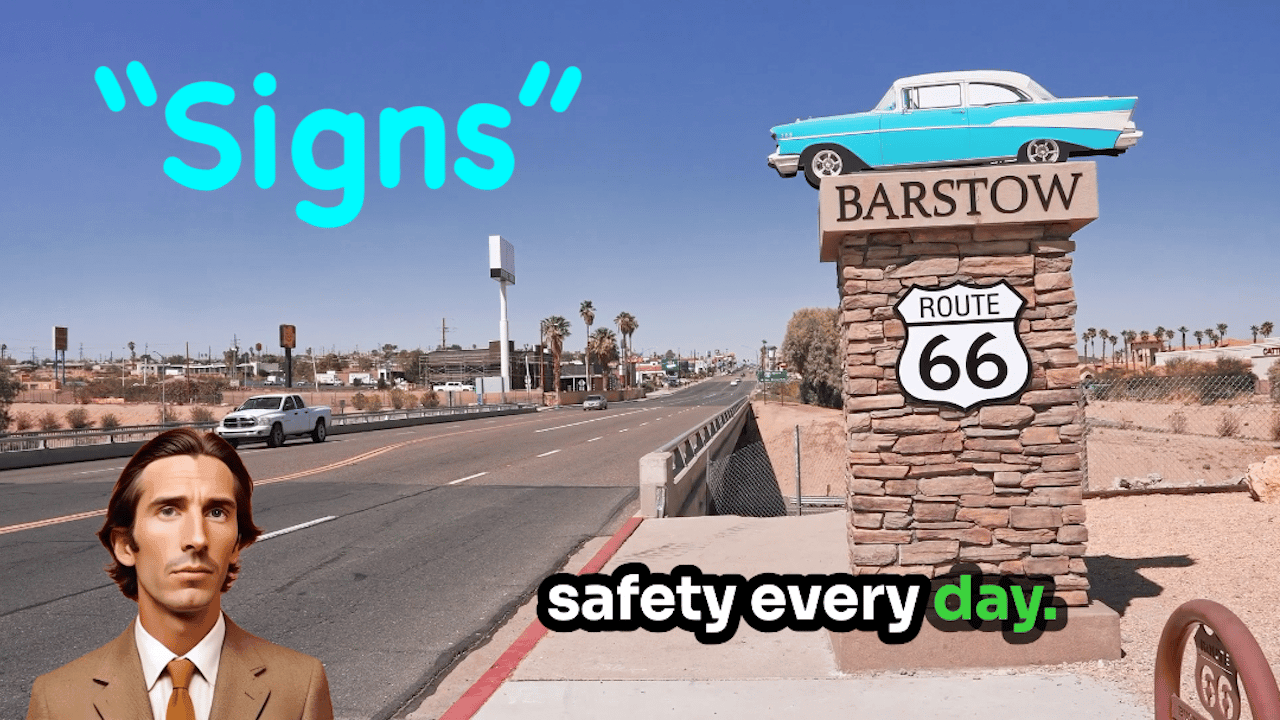

In 1971, the Five Man Electrical Band released Signs, a song that poked fun at the growing number of rules and warnings appearing in everyday life. More than fifty years later, safety professionals know that the right signs are not clutter—they are essential visual tools for preventing injuries, directing traffic, protecting equipment, and communicating critical information quickly.
Why Safety Signs Matter
Modern workplaces are busy environments filled with pedestrians, powered industrial trucks, pallet jacks, automated machinery, storage racks, and material handling activity. Employees may be focused on multiple tasks while moving through complex spaces, so visual communication becomes one of the quickest ways to reinforce safe behavior.
Safety signs help:
When workers can quickly recognize warnings, instructions, and directional cues, decision-making becomes more consistent. This is especially important where people and vehicles share space, where emergency equipment must remain accessible, or where unfamiliar visitors need immediate guidance.
Plan Signs Around Decisions
The best employee communication programs are planned around the points where a person must make a decision: stop, yield, choose a walkway, keep an area clear, wear required PPE, or locate emergency equipment. Placement, visibility, durability, color selection, size, and consistency all influence whether workers notice a sign and respond appropriately.
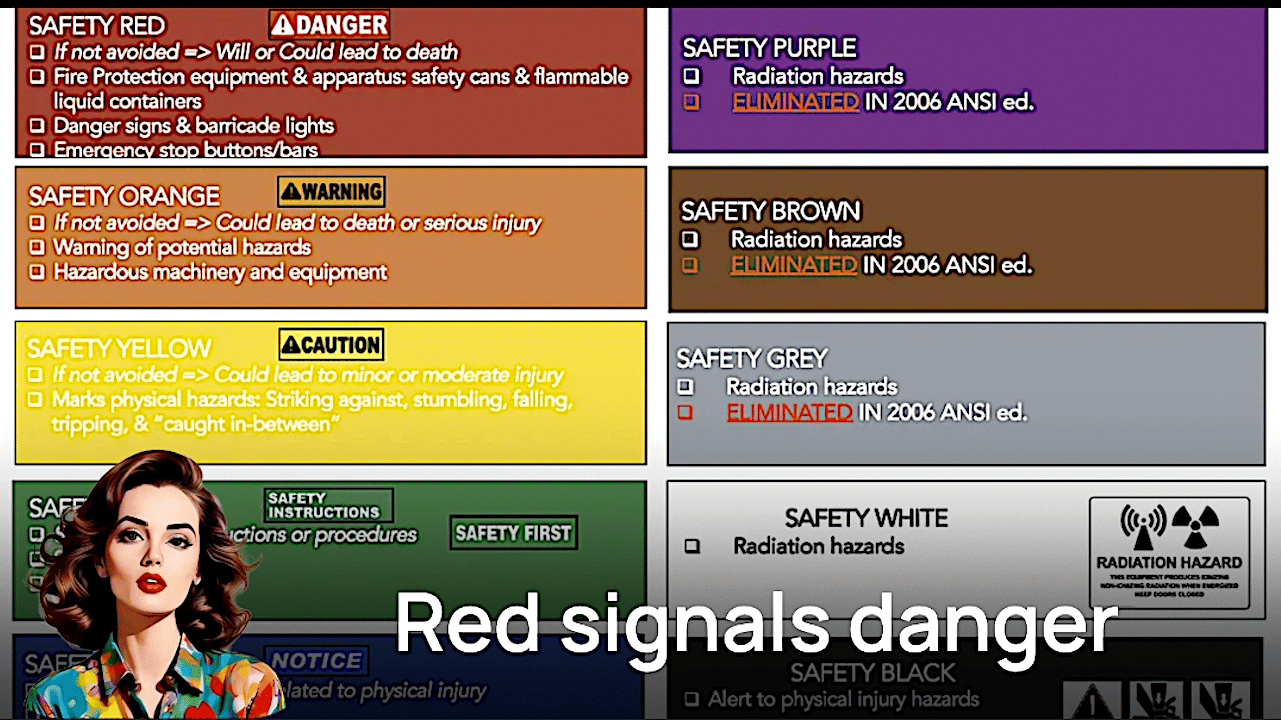
Floor signage is especially useful as they place critical reminders directly in the path of pedestrians and vehicle operators. Signage is also used for compliance initiatives, for example identifying location of fire extinguishers or fire suppression equipment, electrical panels, pathways to exits, and first aid suppliers or emergency eyewashes. When paired with floor markings, ANSI Z535.1 and ISO 7010 color coding and demarcation of traffic lanes, they help convert policies into visible daily work habits.
Standardize the Visual Language
One common mistake is using inconsistent signs, colors, or messages across departments. If yellow indicates a pedestrian walkway in one area but a high hazard zone in another, employees receive mixed signals. Standardization with colors and symbols eliminates that uncertainty.
Consistent design principles help workers recognize meaning almost instantly, which is valuable in facilities with multiple shifts, temporary workers, contractors, visitors, multilingual teams, or high turnover. A shared visual language improves comprehension regardless of experience level.
Many organizations also apply ISO 7010 symbols to support consistent EHS communication across languages and locations. These internationally recognized symbols make warnings, required actions, safe conditions, fire equipment, and prohibited behaviors easier to understand quickly.
Common Floor Safety Signs
Durable adhesive floor signs are effective because they appear where action is needed. The most useful signs usually fall into a few practical categories:
Use ISO 7010 Symbols for Faster Recognition
ISO 7010 provides standardized graphical symbols designed to communicate EHS information regardless of language. These symbols are particularly helpful in diverse facilities because they combine familiar shapes, colors, and pictograms with concise meaning.
Common categories include green safe-condition symbols for exits and first aid, red fire-equipment symbols for extinguishers and alarms, blue mandatory-action symbols for required PPE or procedures, red prohibition symbols for restricted behaviors, and yellow-orange warning symbols for hazards such as forklift traffic, electrical risks, slip hazards, falling objects, and pinch points.
Supporting 5S and Lean Initiatives
Mighty Line safety signs are most effective when integrated into broader visual workplace programs. Organizations using 5S, Lean manufacturing, and continuous improvement rely on visual controls to support organization, standardized work, waste reduction, efficiency, and safer performance.
When employees understand expectations through visual cues, less time is spent searching for information and more time is spent performing productive work. Signs should therefore be reviewed as part of routine audits: Are they visible? Are they still accurate? Are they placed where decisions occur? Are they consistent with the rest of the facility?
Training also plays an important role in making warehouse floor signs effective. A sign can communicate quickly, but employees still need to know what it means, why it matters, and what action is expected. During onboarding, toolbox talks, or daily refreshers, supervisors can walk teams through key signs in their work areas and connect each visual cue to real tasks, traffic patterns, and hazards. This helps floor signs become part of the daily safety culture rather than simply falling into the background.
Perhaps that is the real lesson behind Signs. Excessive or unnecessary signs can create frustration, but the right signs—placed in the right locations and communicating the right messages—can save time, prevent accidents, and protect lives.
In today’s industrial environments, effective floor signs do far more than provide information. When thoughtfully standardized and integrated into a facility’s visual management strategy, they help create workplaces that are safer, more organized, and more productive for everyone.
Thanks for taking time with us today on this Mighty Line Minute Blog. Now, take the time with your fellow employees and work teams to demonstrate that their health and safety is important - by walking the walk - and talking the talk.
See you at MightyLineTape.com!