No Products in the Cart
We have been busy creating new products - Take a look here New Products



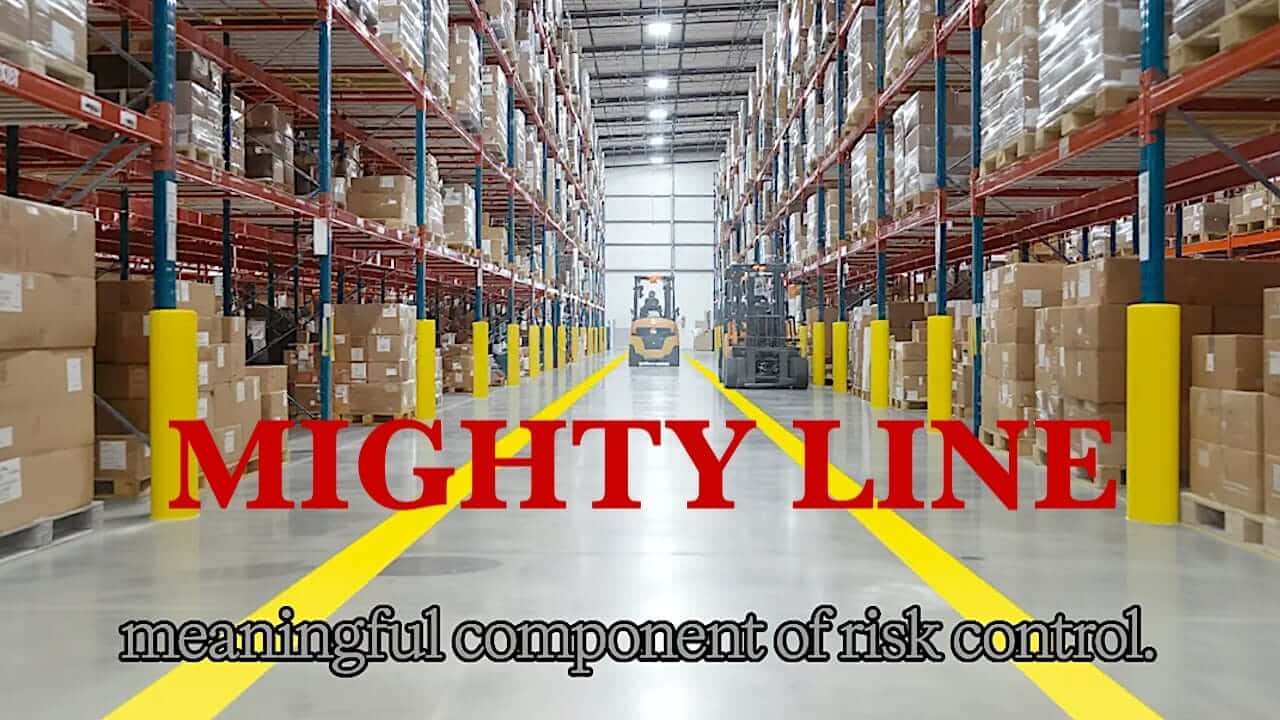
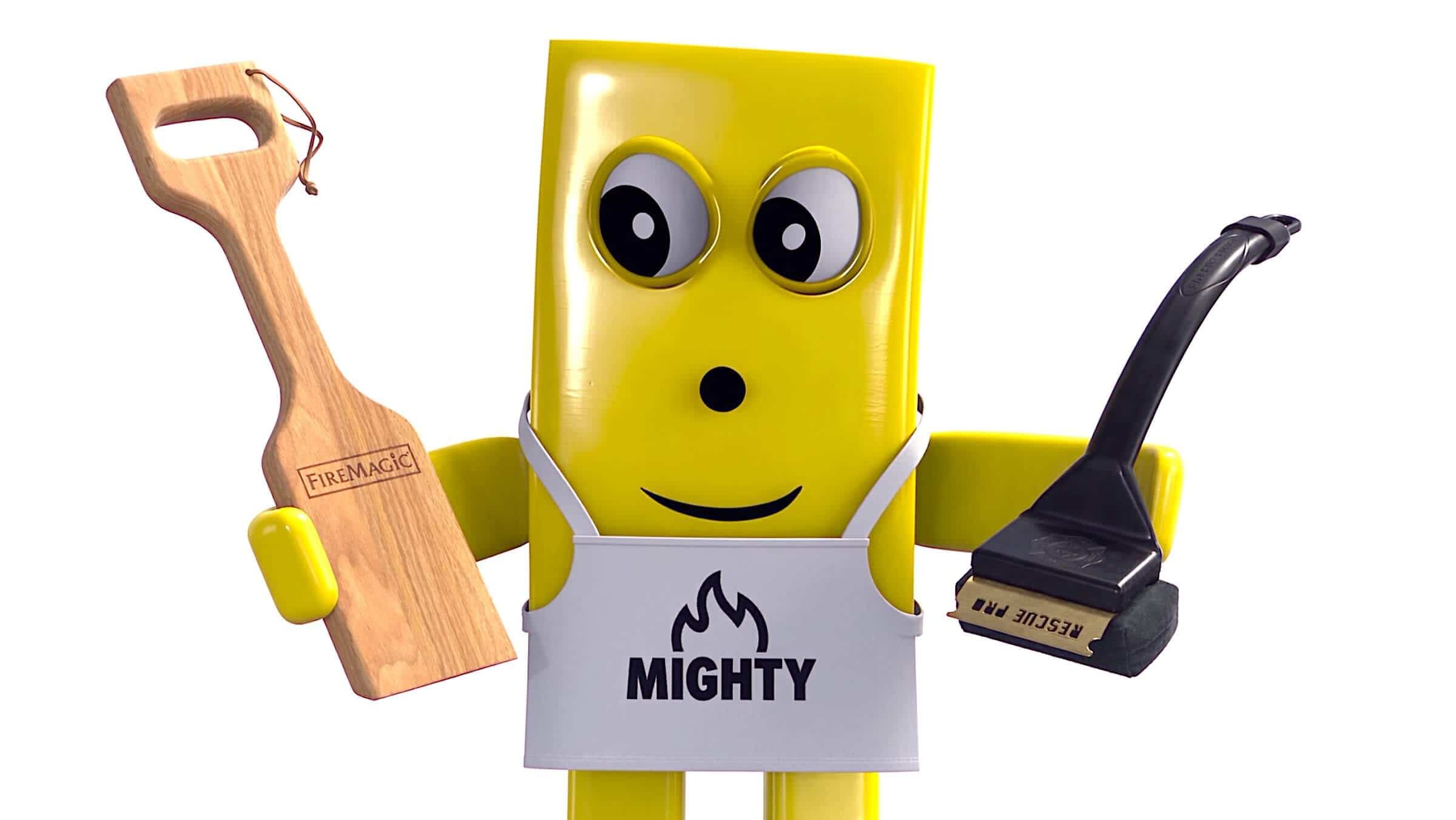
Meet Mighty™️! In a warehouse or industrial facility, the floor does far more than support people, equipment, inventory, and production. It can also communicate. A clearly defined floor can tell employees where to walk, where to stage materials, where equipment belongs, where hazards exist, and which areas must remain clear. When those visual cues are consistent and durable, they become an important part of the facility’s overall safety and operational strategy. For warehouse owner-operators and safety, health, and environmental (EHS) professionals, this is an often-overlooked opportunity: using the floor itself to make the workplace easier to understand.
MightyTM explains: For warehouse operators, the value of visual organization becomes particularly apparent in the number of decisions employees make every day. Employees must continually determine where pallets belong, which pathways are intended for pedestrians or material handling, where temporary storage is permitted, where equipment should be parked, and how close inventory can be placed to designated areas. While a floor-marking system cannot address every operational issue, it can provide immediate visual information that supports effective operational and safety decisions. Rather than relying entirely on wall signs, verbal instructions, training, or memory, facilities can make the floor itself a key element of their communication systems.
Durability, however, is critical. Warehouse floors are working surfaces exposed to traffic, impacts, cleaning, pallet movement, wheels, and other forms of physical wear. A floor-marking solution that quickly becomes damaged, difficult to see, or detached can undermine the very organization it was intended to create. This is why the physical characteristics of a floor tape deserve attention.
MightyTM explains, for example, how Mighty Line's 50-mil thick floor tape incorporates unique, custom beveled edges designed to provide a clean, sloped transition from the tape to the floor. The objective is not simply appearance. A properly designed edge can help create a durable, low-profile marking intended for demanding industrial environments. The objective is not simply visual appearance; it is to create a durable, functional marking that contributes to workplace organization, safety, and operational efficiency.
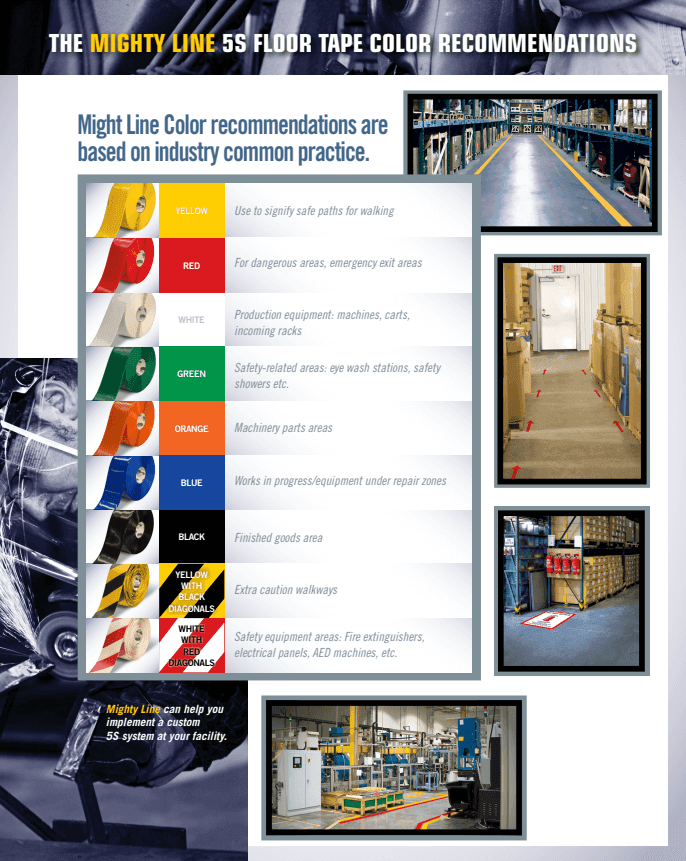
Color is another important component of visual communication. In an industrial facility, color can become a language. When consistently applied, different colors can help employees distinguish pathways, work areas, storage locations, hazards, equipment zones, and other operational features. The effectiveness of that language depends on standardization.
If a particular color means one thing in one part of a facility and something entirely different somewhere else, the visual system becomes less useful. The goal should therefore be a deliberate color strategy that employees can understand and apply consistently. In that sense, a floor-marking program becomes more than striping; it becomes a form of visual management.
This is where the ideas of delineation and organization intersect. A floor marking can delineate a pedestrian route, organize a staging area, identify a designated equipment location, or establish a boundary around an important piece of infrastructure. These markings can help reinforce the physical layout of a facility while supporting broader workplace organization initiatives such as 5S or 6S.
The principle is straightforward: when everything has a defined place—and that place is clearly communicated—it becomes easier to recognize when something is out of place. That can support housekeeping, improve consistency, and make deviations from established practices more visible.
For EHS professionals, visibility can also be an important element of hazard recognition. A floor marking does not eliminate a hazard, substitute for engineering controls, or replace appropriate procedures and training. It can, however, serve as a visual cue that draws attention to an important condition or boundary. In environments where employees are constantly moving between tasks, equipment, and work areas, those cues can help reinforce expectations.
The most effective approach is to view floor markings as one component of a layered safety strategy rather than as a standalone solution. MightyTM reinforces this in his message.
There is also an operational dimension that deserves attention. Poorly defined spaces can contribute to congestion, inconsistent material placement, blocked pathways, and unnecessary movement. Those conditions can affect productivity as well as safety. When storage, staging, pedestrian travel, and equipment areas are visually organized, employees have a clearer understanding of how space is intended to function. That clarity can help facilities maintain standards over time.
For an owner-operator, this is important because a well-organized facility is not simply easier to navigate; it can also be easier to manage.
The key is to design the floor-marking system intentionally. Start by identifying the behaviors and movements the facility needs to support. Determine where pedestrians travel, where vehicles operate, where materials are staged, where equipment belongs, and which areas need to remain unobstructed. Establish a consistent color and marking convention. Then evaluate whether the selected marking materials are appropriate for the traffic and environmental conditions they will encounter.
Finally, maintain the system. A visual standard is only effective when the markings remain visible, understandable, and consistent with the way the operation actually functions.
The broader lesson is simple: the floor can become a communication tool. For warehouse owners and EHS professionals, that creates an opportunity to transform an otherwise passive surface into an active part of workplace organization and visual safety. Durable floor markings can help define space, reinforce pathways, identify hazards, organize equipment, and make expectations more apparent.
As Mighty™️ says in the Mighty Line Minute podcast, “you might call me a delineator, an organizer, or even a color curator.” Whatever name you choose, the objective remains the same: make the workplace easier to understand, easier to navigate, easier to manage ... and safer.
In a demanding industrial environment, a clearly marked floor can be one of the simplest and most effective tools for reinforcing safety, organization, and operational efficiency.