No Products in the Cart
We have been busy creating new products - Take a look here New Products

How One Historic Steam Locomotive Reconnected a Community with Its Rails Heritage
On July 13, 2026, thousands of people gathered throughout Rocky River, Ohio, united by the unmistakable sound of a steam whistle echoing across the city. Cameras were raised, families lined the tracks, and longtime railroad enthusiasts stood alongside children witnessing a steam locomotive for the first time. Their reason for gathering was extraordinary: the arrival of Union Pacific Big Boy No. 4014, the world's largest operating steam locomotive.
Before the Rails: A Community Shaped by Geography
Rocky River's transportation story begins well before the first railroad tracks were laid across northern Ohio.
In 1764, British Colonel John Bradstreet led an expedition across Lake Erie during Britain's efforts to secure the Great Lakes following the French and Indian War. While attempting to find refuge during a violent storm, Bradstreet's flotilla missed the mouth of the Rocky River and landed farther west. The powerful storm destroyed approximately twenty-five boats, six cannons, and critical military supplies. Nearly 1,500 men found themselves stranded, with many ultimately forced to make the arduous 400-mile journey on foot back to Fort Niagara.
The event demonstrated both the opportunities and challenges presented by the Rocky River. Its steep gorge, carved over thousands of years and now preserved within the Rocky River Reservation of the Cleveland Metroparks, created a distinctive natural landscape. At the same time, its location along Lake Erie encouraged early settlers to envision the river becoming one of the Great Lakes' premier commercial ports. Geography appeared promising.
History, however, had other plans. As Cleveland's harbor developed into the dominant shipping center on Lake Erie, Rocky River evolved in a different direction.
The Railroad Changes Everything
By the late nineteenth century, railroads had become the engines of economic growth across America, and Rocky River was no exception.
The arrival of rail service dramatically altered daily life. Residents could travel more efficiently between communities, businesses gained dependable access to regional markets, and industries could receive raw materials while shipping finished goods throughout the Midwest.
The historic Rocky River Depot, constructed in 1882, became a focal point of community life. More than simply a station, it served as a gateway connecting Rocky River with Cleveland and destinations far beyond. Long before interstate highways existed, passenger trains represented the fastest and most reliable means of travel for countless Americans.
For many families, the depot marked the beginning of vacations, business trips, military departures, and joyful reunions. Freight trains arriving through Rocky River also carried the materials that supported local commerce and fueled the region's continuing growth.
Today, the beautifully preserved depot stands as a reminder of an era when railroad stations occupied the same central role airports serve in many communities today.
The Interurban Era
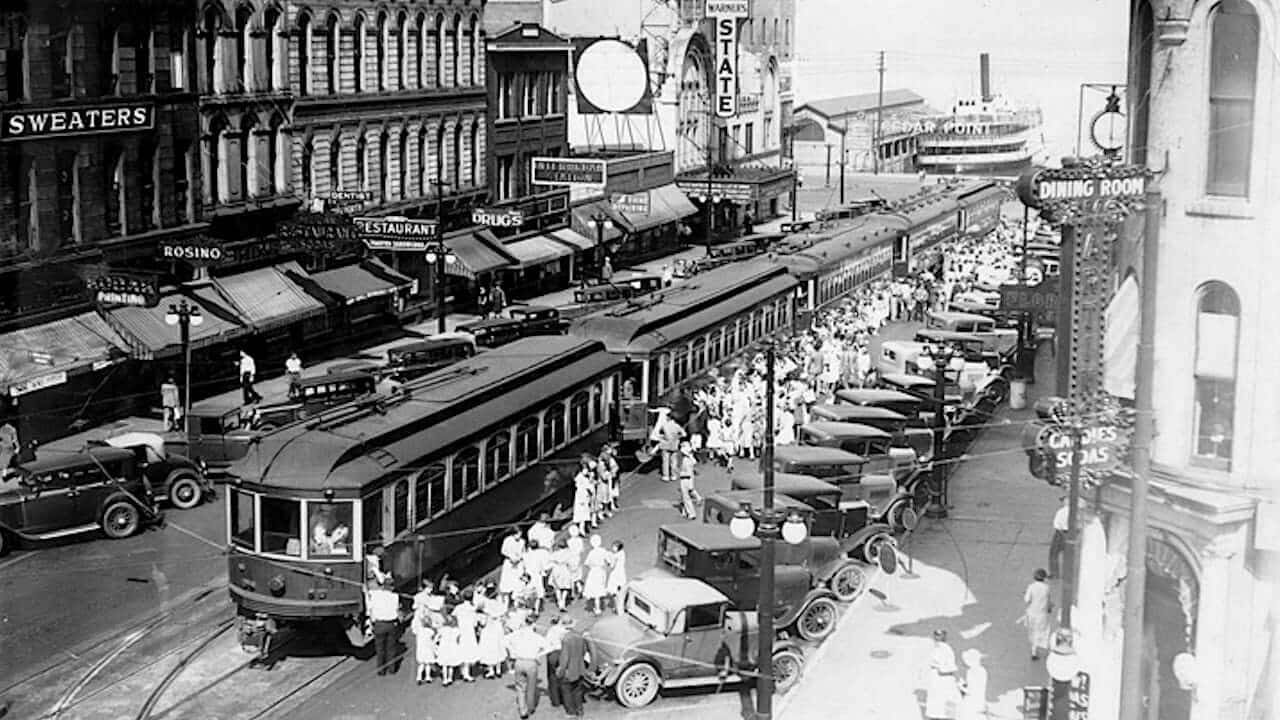
Rail transportation in Rocky River became even more accessible with the arrival of the Lake Shore Electric Railway. Operating from 1901 until 1938, the electric interurban system connected communities stretching along Lake Erie's shoreline. Unlike traditional steam railroads, interurban trains offered frequent passenger service designed for everyday travel.
Residents could commute to work, visit neighboring communities, enjoy shopping excursions, or simply take a leisurely ride along the lakeshore. One of the railway's most popular destinations was Cedar Point, making family vacations and weekend recreation easier than ever before.
The Lake Shore Electric represented an innovative transportation system decades ahead of its time. Combining elements of streetcars and railroads, it demonstrated how regional transit could efficiently connect growing suburban communities throughout northern Ohio.
Although the interurban era eventually ended as automobiles became more affordable and highways expanded, its influence on community development remains an important chapter in Rocky River's transportation history.
Enter Big Boy 4014
While Rocky River's railroad network continued evolving in Ohio, another chapter of railroad history was unfolding more than a thousand miles west.
Union Pacific Big Boy No. 4014 was built in 1941 to solve one of America's greatest railroad challenges: hauling massive freight trains across the steep mountain grades of Wyoming and Utah. During World War II, these enormous locomotives transported vital supplies, raw materials, and military equipment that supported both the nation's economy and the war effort.
The numbers remain astonishing.
Standing approximately 16 feet tall and stretching well over 130 feet in length with its tender, Big Boy weighs more than one million pounds. Its articulated design allowed the massive locomotive to negotiate curves while producing extraordinary pulling power. Only twenty-five Big Boy locomotives were ever constructed, making surviving examples exceptionally rare.
After decades of retirement, Union Pacific completed an extraordinary restoration of No. 4014, returning the locomotive to operating condition in 2019. Today, it serves not as a freight hauler but as a traveling ambassador for American railroad history.
Its nationwide tours allow communities across the country to experience living history firsthand.
A Perfect Stop During America's 250th Anniversary
Big Boy 4014's appearance on Rocky River's rails during America's 250th anniversary celebration carried special significance.
The locomotive did not simply pass through town. It transformed an ordinary stretch of railroad into a living museum.
Standing beside the historic 1882 depot, visitors could witness nearly a century and a half of railroad history in one unforgettable scene. The preserved depot represented the community's nineteenth-century railroad heritage, while Big Boy symbolized the technological achievements that helped America become an industrial powerhouse during the twentieth century.
For longtime residents, the event rekindled memories of passenger trains and earlier generations who depended upon the railroad.
For youngers stopping by the Rocky River and neighboring community's rails, it offered an opportunity to experience history beyond textbooks, photographs, and museums. Steam, steel, sound, and motion combined to create an experience impossible to duplicate through video alone.
Rails and Locomotives - More Than Trains With WHeels
Perhaps the greatest significance of Big Boy 4014 lies not in its size but in what it represents.
Railroads have always connected more than destinations. They connect generations.They linked frontier settlements with growing cities. They united workers with opportunity. And they allowed families to travel, businesses to expand, and communities to prosper.
When Big Boy rolled through Rocky River, it symbolically connected every era of the city's transportation history—from Colonel Bradstreet's eighteenth-century expedition and early settlers' dreams of lake commerce to the arrival of steam railroads, the Lake Shore Electric interurban, and today's modern freight operations.
For a few memorable hours, the past and present shared the same rails.
Preserving History While Building the Future
Communities grow stronger when they understand the stories that shaped them.
Historic landmarks like the Rocky River Depot, its rails, and special events such as Big Boy 4014's visit remind us that innovation has always driven progress. Every generation builds upon the achievements of those who came before, whether through transportation, manufacturing, infrastructure, or workplace safety.
At Mighty Line, that same philosophy continues every day. While modern industries no longer rely upon steam locomotives to move commerce across the country, they still depend upon efficient operations, organized facilities, and safe workplaces. Clear visual communication, effective traffic management, and thoughtful planning help today's warehouses and manufacturing facilities operate with the same spirit of reliability and purpose that once defined America's great railroads.
Big Boy No. 4014 may no longer haul freight across the American West, but it continues carrying something equally valuable: our shared history.
Its journey through Rocky River served as a powerful reminder that preserving our past helps inspire the future. Whether standing beside a historic depot or watching a million-pound steam locomotive roll past, we are reminded that the communities we enjoy today were built by generations of innovation, determination, and connection.
Sometimes, all it takes is the sound of a steam whistle to bring history roaring back to life.